

I left Naples 7 years ago to move to Rome.
There’s a sentence I’ve heard more times than I can count:
“I wouldn’t have thought you were from Napoli!”
And its cheerful cousin:
“Oh, I can barely hear your accent!”
These lines always arrive as compliments: light, friendly, tossed into conversation with the confidence of someone who believes they’re saying something nice. But as a Neapolitan, I’ve learned to decode what sits beneath them: surprise, expectation, a stereotype quietly at work.
Because in Italy - and honestly, not just in Italy - the language you speak is political. Not only the words you choose, but the very code you choose to speak in. Across the world, languages and dialects are markers of power, conquest, and resistance: colonisation has erased languages and others are disappearing not because they lack beauty or complexity, but because speaking them is ridiculed, or deemed incompatible with “progress.” Every extinction is cultural, emotional, ancestral, as well as linguistic.
So when we talk about dialects, we’re not talking about something small or local. We’re talking about what a society decides is worth preserving and what it quietly allows to vanish.
In these 7 years I noticed my tongue adjusting itself, softening its edges, rounding its vowels. Not because I was ashamed, but because I was tired of managing people’s reactions, tired of jokes that weren’t jokes, tired of correcting stereotypes I never asked to wear. Fatigue is one of the quietest ways prejudice shapes you.
What We Call “Dialect” (And Why That Word Is Loaded)
In the Italian context, dialect is a misleading term. Neapolitan isn’t a quirky regional twist on Standard Italian, it’s a Romance language. A Romance language, in academic terms, is a language that descends directly from spoken Latin, evolving regionally after the fall of the Roman Empire. Italian, French, Catalan, Neapolitan, Sicilian, Portuguese, Romanian are all siblings, there are no hierarchies.
As Romance philologist Lorenzo Renzi and linguist Tullio De Mauro often stressed, calling them “dialects” is historically and politically loaded: it suggests inferiority, localism, and lack of prestige, even though languages like Neapolitan and Sicilian have centuries of literature and courtly use behind them.
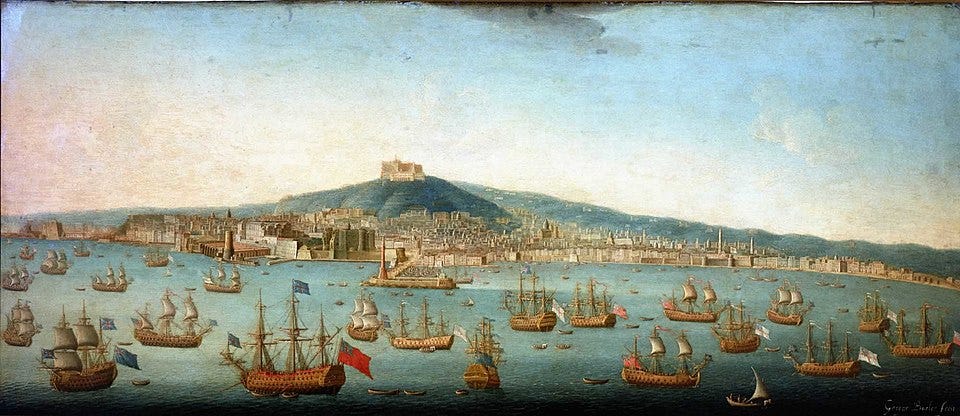
Neapolitan, specifically, is a linguistic mosaic, a mix of spoken Latin and centuries of contact with other languages brought by the civilisations that passed through Naples: Greek from Magna Graecia, Spanish and Catalan during the Aragonese and Bourbon periods, French during the Angevin dynasty, Arabic influence mediated through Sicily, and later, influences from the languages of trade across the Mediterranean
By the 1500s, Neapolitan was a literary and administrative language, used in poetry, theatre, and court life. Writers like Basile, Sgruttendio, and later Eduardo De Filippo carried forward a tradition that was never “substandard”, just not the variety chosen for the nation-state.
Why Standard Italian Favoured Northern Varieties
When Italy unified in the 1860s, the new government faced a strange problem: the vast majority of the population did not speak what we call Italian. They spoke their local Romance languages.
So which language should become the Italian? Standard Italian didn’t fall from the sky. It was constructed consciously, selectively, and politically.
Only 2–10% of Italians spoke Italian fluently, but the new state needed a common language: instead of recognising Italy as multilingual, the state opted to standardise Italian from above. A group of intellectuals, mostly Northern, mostly from educated elites, decided that the Italian of literature, the Tuscan of the 14th-16th century, especially the Florentine of Dante, Petrarca, and Boccaccio, the “Three Crowns, would become the model. It wasn’t the most widely spoken, but it was culturally prestigious and already associated with power.
Northern elites led the unification process, controlled institutions, and had access to publishing, education, and administration. Tuscan felt “neutral,” “refined,” “civilised enough” to melt into a national identity that hadn’t been invented yet. And just like that, all other languages, including Neapolitan, were downgraded to dialects, a word now heavy with implication: minor, rustic, uneducated, lesser.
Why Southern Dialects Still Carry Negative Connotations
Once the hierarchy was established, it became self-perpetuating.
In schools, dialect was treated as a linguistic misbehavior, something to “correct.”
In media, Southern accents were used for comic relief, caricatures, and stereotypes.
Migration patterns added fuel: when millions of Southerners moved to the North or abroad, they brought their language with them, and met prejudice head-on. Their accents became shorthand for class, education, competence.
So when someone from the South doesn’t “sound Southern,” they’re praised because they’ve escaped the stereotype, even if unintentionally. And when someone does sound Southern, the stereotype climbs immediately onto the stage.
Why We Switch: What Sociolinguistics, Pragmatics, and the Brain Tell Us
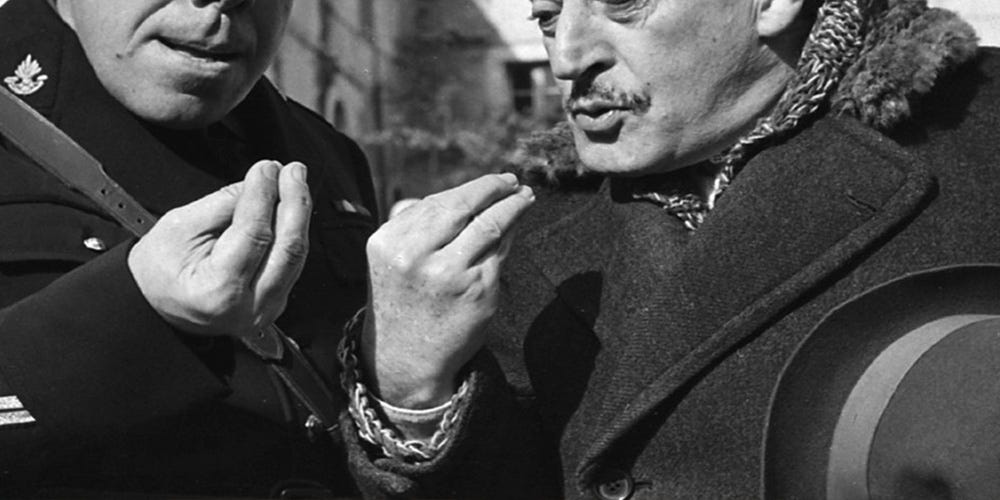
From a linguistic point of view, this behaviour isn’t accidental. Sociolinguistics has long shown that people adjust the way they speak depending on context, audience, and perceived power. This is known as code-switching: moving between languages, dialects, or registers to signal belonging, distance, professionalism, or safety.
Dialect isn’t abandoned because it’s linguistically inadequate, but because it’s socially penalised. Pragmatically, dialects carry emotional weight: they express intimacy, irony, anger, and affection more efficiently than any neutral standard. And neurolinguistics explains why suppressing them feels so uncomfortable: the languages and dialects we learn early in life are tied to memory and emotion more deeply than later-learned varieties. They are processed differently, felt more strongly.
So when someone tones down their accent or avoids their dialect, they’re navigating a hierarchy, filtering identity, choosing the code that experience has taught them will cost less.
Why Stereotypes Feel Comforting (To Everyone Except the People Inside Them)
Because there’s another piece to this story: people find stereotypes comforting. Not maliciously. Comfort rarely is.
Stereotypes offer a shortcut, a ready-made story, a sense of control. They save people from having to deal with nuance, complexity, or, heaven forbid, seeing others as individuals shaped by history rather than caricature.
Stereotypes about Naples and the South function exactly like that. They reduce an entire culture to a handful of tropes so familiar that people cling to them like safety rails. You know how to react to the cliché, what you don’t know is how to react to the actual person, and the complexity they may carry. So when someone tells me they “couldn’t tell I’m Neapolitan,” what they’re really saying is: You don’t fit the story I already had in mind. And the story is comforting, so the mismatch feels worth commenting on.
The stereotype survives not because it’s true, but because it’s easy. It demands less work than curiosity, less openness than listening, less courage than letting go of pre-packaged narratives about the South.
But stereotypes don’t just simplify. You pay the price for someone else’s convenience, and when you disrupt that convenience, when you don’t align with the cartoon version of your city, people notice. They comment. They label it “unexpected.”
Nuance is unsettling, but stereotypes? Stereotypes soothe the observer, even as they flatten the observed.
The Neapolitan Accent in the World: A Personal Note
Leaving Naples amplified Naples.
Not in a nostalgic, postcard way, not the mandolin clichés or the “pizza-Vesuvio-mare” collage people love to project onto us. When I lived in Naples, the city was simply there. When I left, Naples became something I carried rather than something I inhabited.
It wasn’t absence; it was revelation. Naples wasn’t around me anymore, so it surfaced from within. I used to think that to “find myself” I had to go somewhere else. New city, new rules, new life. But distance didn’t erase anything; it clarified it. Suddenly, I heard my accent more. I defended my dialect more.
I felt more Neapolitan away from Naples than I ever did living inside it.
Reclaiming the Accent
My dialect is a living archive: it’s my grandparents’ voices, it’s the guy behind the counter at the café opposite uni that always said “jamme piccerella”, it’s childhood summers, the rhythm of the city echoing between alleys. Sometimes, when I speak Neapolitan outside Naples, I feel a tiny rebellion spark in my chest. A “here I am” that refuses to be filtered.
Your accent should not determine how seriously you are taken.
Your dialect should not be interpreted as a lack, a flaw, a limit.
Your linguistic history is not an inconvenience for someone else’s ears.
And this goes doubly for foreign languages. Every time we speak a second language with an accent, we carry the weight of this insecurity with us. We apologise for mispronunciations. We shrink when someone points out our intonation. We try to sound “less foreign,” as if linguistic difference were something to hide. But having an accent in another language is not a failure, it’s evidence of courage, of adaptability, of the human brain doing something remarkable. Yet the shame comes from the same place: the hierarchy of “right” and “wrong” ways of sounding, and who gets to decide.
When someone says they “can barely hear my accent,” I’ve learned to smile politely, but inside I translate it for what it is: a reminder of how much work still needs to be done in dismantling the quiet hierarchies we’ve inherited, in teaching people that sounding different is not sounding inferior, in recognising that linguistic prejudice is still prejudice even when wrapped in a smile.
Because dialects are political, but they are also personal, and mine, Neapolitan, is a declaration: of my heritage, my complexity, my resistance. A language that survived monarchies, invasions, unification, modern prejudice, and will survive your bullshit stereotypes, too.
It would survive even better if we stopped congratulating people for hiding who they are. We would all have a lot more fun.